
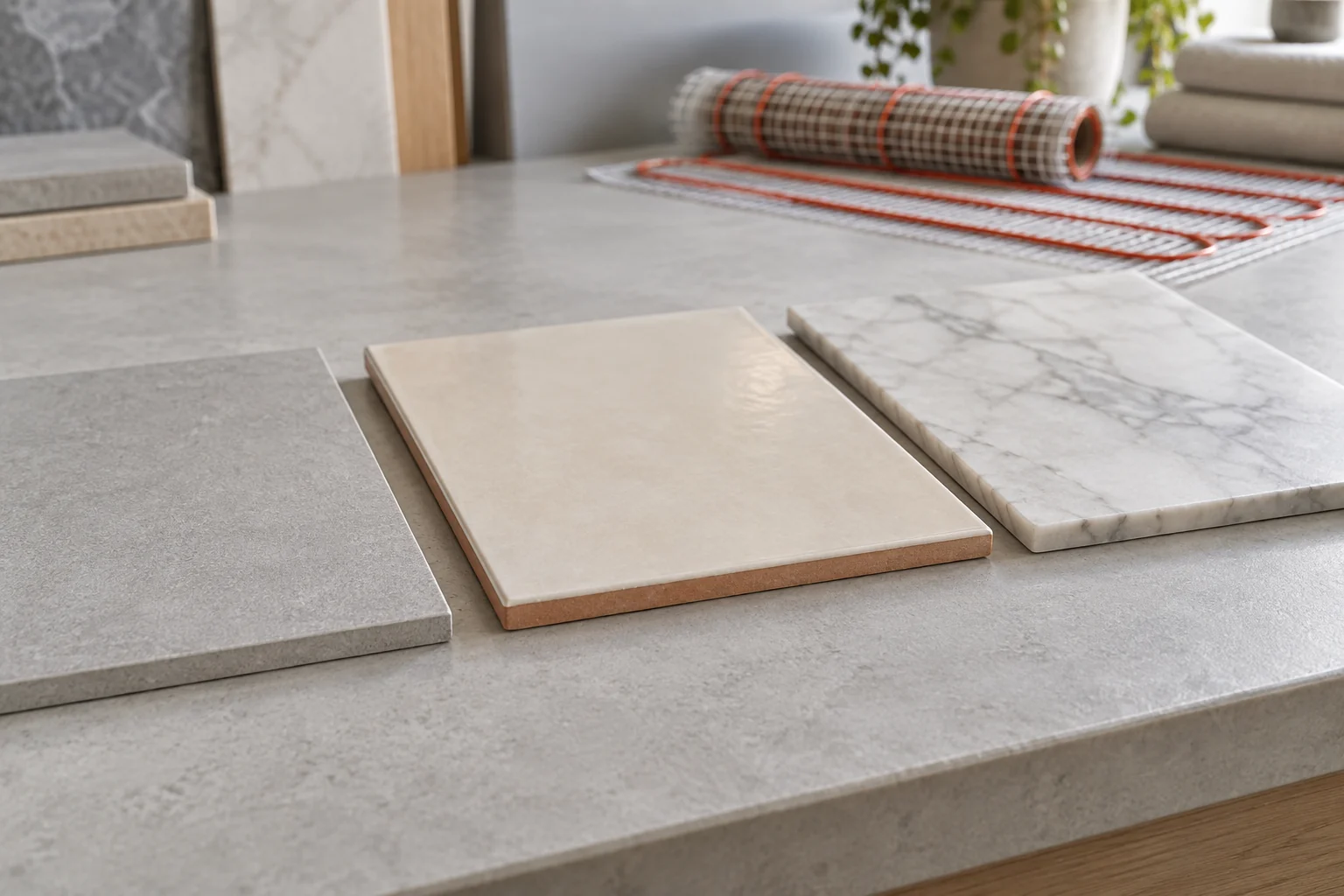
Best Tile for Heated Floors: Porcelain, Ceramic & Natural Stone Explained
Article Summary
An evergreen guide for homeowners considering tile over radiant or in-floor heating. Explain why tile works well with heated-floor systems, compare porcelain, ceramic and natural stone, and clarify the practical factors that matter before purchase: heat transfer, tile thickness, subfloor preparation, expansion movement, room use and professional installation.
Table of Contents
- Why Tile Works Well With Heated Floors
- What Makes a Tile Material Good for Radiant Heat?
- Porcelain Tile for Heated Floors
- Ceramic Tile for Heated Floors
- Natural Stone Tile for Heated Floors
- Porcelain vs. Ceramic for Heated Floors
- Does Tile Thickness Affect Heat Transfer?
- Which Tile Sizes Work Best With Heated Floors?
- Heated Bathroom Floors: What to Consider
- Heated Kitchen Floors: What to Consider
- Subfloor Preparation, Movement and Installation Requirements
- Can All Tile Be Used With Every Heated-Floor System?
- Common Mistakes When Choosing Tile for Heated Floors
- How to Choose the Best Tile for Your Heated Floor
- Explore Tile Options for Heated Floors at RSC
Why Tile Works Well With Heated Floors
Tile can feel cool underfoot when the heating is off, but it is a practical surface over radiant heat. Instead of insulating the room from the heat source, suitable tile allows warmth to move through the floor finish.
Heating manufacturer Warmup identifies tile and stone as suitable floor coverings because they conduct and retain heat well. This makes them useful options when planning a comfortable bathroom or kitchen.
The best tile for heated floors still depends on the room, the exact product and the complete floor assembly. A tile choice alone cannot guarantee fast warm-up times or low running costs.
What Makes a Tile Material Good for Radiant Heat?
Start with a tile approved for floors and compatible with the planned heating system. A decorative wall tile is not automatically suitable simply because it is ceramic.
- Heat transfer: consider the material and thickness alongside the layers underneath.
- Durability: match the product to foot traffic and everyday use.
- Room suitability: check wet-area use, surface characteristics and cleaning needs.
- Installation compatibility: confirm the tile works with the specified membrane, mortar and substrate.
- Maintenance: choose a finish you can comfortably care for.
Ask for the product data before purchasing. The name of the material is a starting point, not a complete specification.
Porcelain Tile for Heated Floors
Porcelain is a useful first option for homeowners who want a durable, low-maintenance heated floor. Floor-rated porcelain comes in many sizes and appearances, including stone-look and wood-look designs.
For a busy kitchen or family bathroom, its low water absorption and practical cleaning requirements can make it an appealing choice. However, a polished finish and a textured finish can behave differently underfoot, even within the same collection.
Browse RSC’s porcelain tile collection and confirm the exact product’s floor rating, intended use and compatibility before selecting it for a heated assembly.
Ceramic Tile for Heated Floors
Floor-rated ceramic tile can also be a sensible choice over radiant heating. It may suit a project where a specific colour, smaller format or purchase budget is the main priority.
Check that the selected tile is made for the room’s expected traffic. Some ceramic collections are designed for walls, so matching the look of an existing backsplash does not establish floor suitability.
Compare the installed project cost, including preparation and the heating assembly. A lower tile price will not remove the need for a sound subfloor, compatible setting materials and proper installation.
Natural Stone Tile for Heated Floors
Natural stone can bring individual veining and variation to a heated floor. Marble, slate and other stones differ in their structure, finish and care requirements, so they should not be treated as interchangeable products.
Ask about sealing, cleaning and the suitability of the specific stone for the intended room. Marble is generally more porous than porcelain and can be sensitive to acidic spills or cleaners. Heating does not remove those maintenance considerations.
Stone can also require a different supporting assembly. Have the installer confirm the requirements before ordering. For broader material differences, read our ceramic vs. porcelain vs. marble comparison.
Porcelain vs. Ceramic for Heated Floors
Both floor-rated ceramic and porcelain can work with compatible heated-floor systems. Porcelain is often a practical starting point for a busy kitchen or bathroom, while ceramic may suit a particular design or budget.
Neither material name tells you exactly how quickly a finished floor will heat. Compare actual thicknesses, product approvals and the proposed installation rather than assuming all porcelain heats faster than all ceramic.
- Choose porcelain when low water absorption, everyday durability and design range are priorities.
- Consider ceramic when a floor-rated product meets the room’s needs and gives you the look and price you want.
- For either option, have the installer approve the complete material combination.
Does Tile Thickness Affect Heat Transfer?
Thickness can affect how quickly the surface responds. A thicker tile or stone layer generally takes longer to warm than a thinner comparable layer. However, thinness alone is not a reason to choose a product.
The mortar bed, heating location, substrate and insulation also influence the result. Compare the complete floor build-up and confirm that the tile thickness falls within the system’s requirements.
Check finished floor height at doors, adjoining rooms and fixtures before ordering. Avoid choosing an unusually thin tile solely to reduce the floor height without confirming that it is suitable for the application.
Which Tile Sizes Work Best With Heated Floors?
There is no single tile size that is best for every heated floor. Room layout and the heating assembly both matter. Large formats can create a quieter pattern with fewer grout lines, while smaller tiles may suit compact spaces or particular floor shapes.
Some membranes impose minimum tile dimensions. For example, Schluter specifies a minimum 2 × 2-inch tile format for DITRA-HEAT. This is a product-specific requirement, not a universal rule for all systems.
Compare the visual and layout implications in our 12×24 vs. 24×48 porcelain tile guide, then check your preferred size against the chosen system.
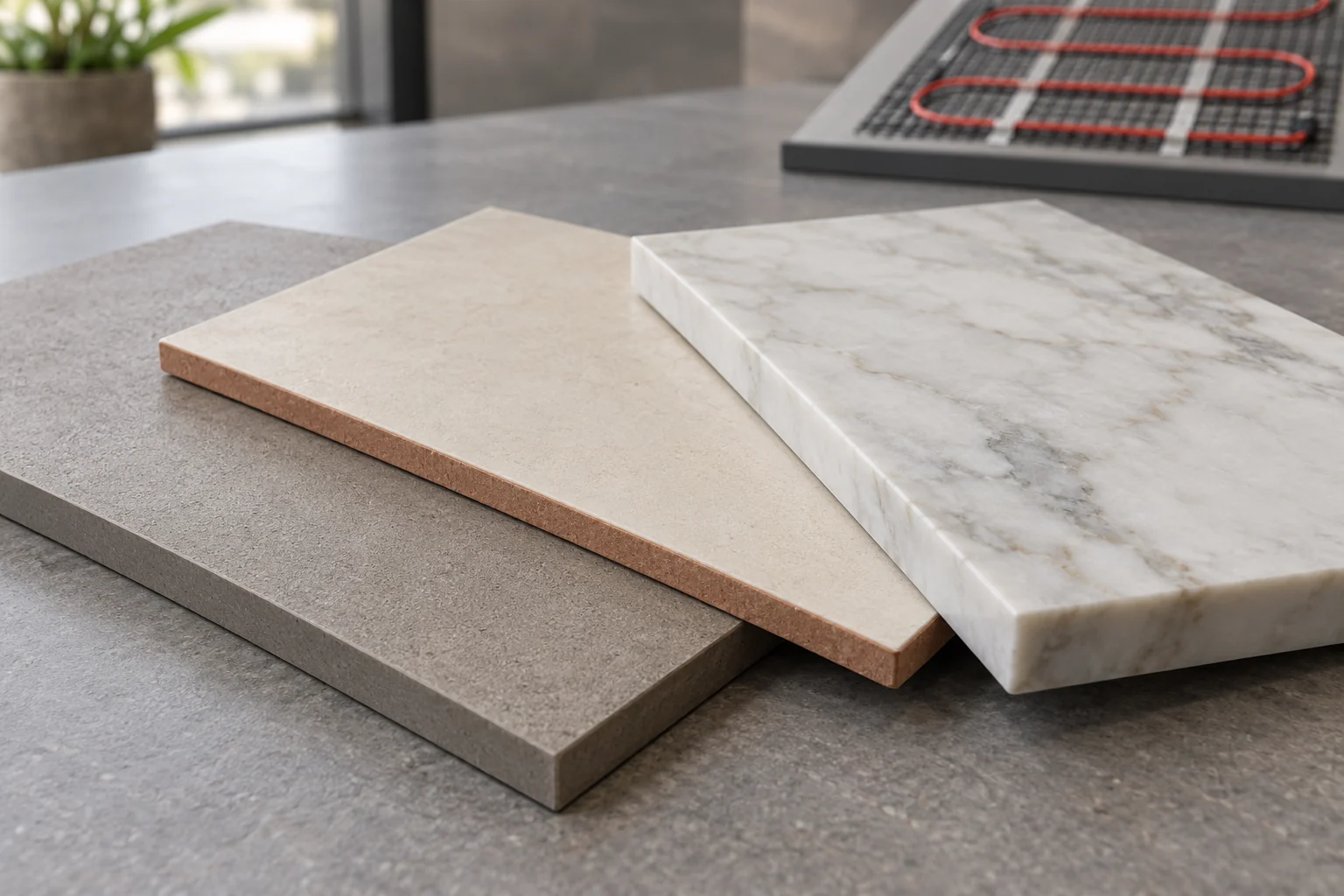
Heated Bathroom Floors: What to Consider
For a heated bathroom floor, begin with a product suitable for bathroom floor use. Consider wet feet, cleaning, grout joints and the transition into the shower.
Heating does not make a slippery surface safer, and a matte appearance alone does not establish slip resistance. Review the exact product’s intended-use information. Our matte vs. polished porcelain guide explains the wider finish choices.
A shower floor has additional drainage and waterproofing requirements. Do not assume the main bathroom tile or heating layout can simply continue into it. If the project includes a shower, review our porcelain shower-floor tile guide and have the proposed assembly checked separately.
Heated Kitchen Floors: What to Consider
In a kitchen, tile needs to suit regular foot traffic, spills and cleaning as well as the heating system. Floor-rated porcelain is worth comparing when everyday maintenance is a priority.
Consider how the colour and surface will show crumbs, marks and cooking residue. View a sample beside your cabinets and countertop rather than judging the tile from a screen alone.
Finalize the cabinet and island layout before the heating design is completed. The installer needs to know which areas will remain exposed and must follow the heating manufacturer’s placement restrictions. Also discuss how the finished floor height will affect appliance clearances and transitions.
Subfloor Preparation, Movement and Installation Requirements
A strong tile choice still needs a properly prepared base. Ask the installer to assess subfloor stiffness, flatness, moisture conditions and the complete build-up before approving the order.
Natural stone may need more support than ceramic or porcelain. Follow the requirements for the actual stone and system rather than borrowing details from a different project.
Heating and cooling create movement within the floor assembly. The installation needs the specified movement accommodation, suitable setting materials and required curing time before the heat is switched on. A heating membrane does not correct every underlying floor problem.
For an overview of planning responsibilities, see our guide to professional flooring installation.
Can All Tile Be Used With Every Heated-Floor System?
No. Electric mats, cable-and-membrane systems and hydronic assemblies have different specifications. A tile that suits one installation is not automatically approved for another.
Before purchasing, have the installer check the tile type, dimensions, thickness, backing and setting-material requirements against the current system instructions. For example, Schluter provides its own mortar requirements for tile over DITRA-HEAT.
Keep the tile specifications and system documentation together. If either manufacturer’s instructions leave a compatibility question unanswered, resolve it before committing to the materials.
Common Mistakes When Choosing Tile for Heated Floors
- Choosing a wall-only tile: confirm a floor rating before comparing colours.
- Assuming all mosaics work: check minimum tile dimensions for the chosen system.
- Buying on thickness alone: consider floor suitability and the full assembly.
- Ignoring stone care: understand sealing and cleaning needs before purchase.
- Overlooking floor height: plan thresholds, doors and appliance clearances.
- Treating finish as a safety rating: verify intended use for the room.
- Ordering before the installer reviews the product: confirm compatibility while alternatives are still easy to consider.
How to Choose the Best Tile for Your Heated Floor
Bring the room plan, heating-system details and a few preferred tile samples into the same conversation. A practical shortlist should meet both your design goals and the installation requirements.
- Identify the room’s traffic, moisture exposure and cleaning needs.
- Compare floor-rated porcelain, ceramic and suitable natural stone.
- Check the finish in person and review product-use information.
- Confirm size, thickness and overall floor height with the installer.
- Review preparation, setting materials and heating-system compatibility.
- Compare the complete installed cost and ongoing maintenance.
For many homes, porcelain is a useful place to begin the comparison. The final choice should be the exact product that fits the room, the heating assembly and the level of care you want.
Explore Tile Options for Heated Floors at RSC
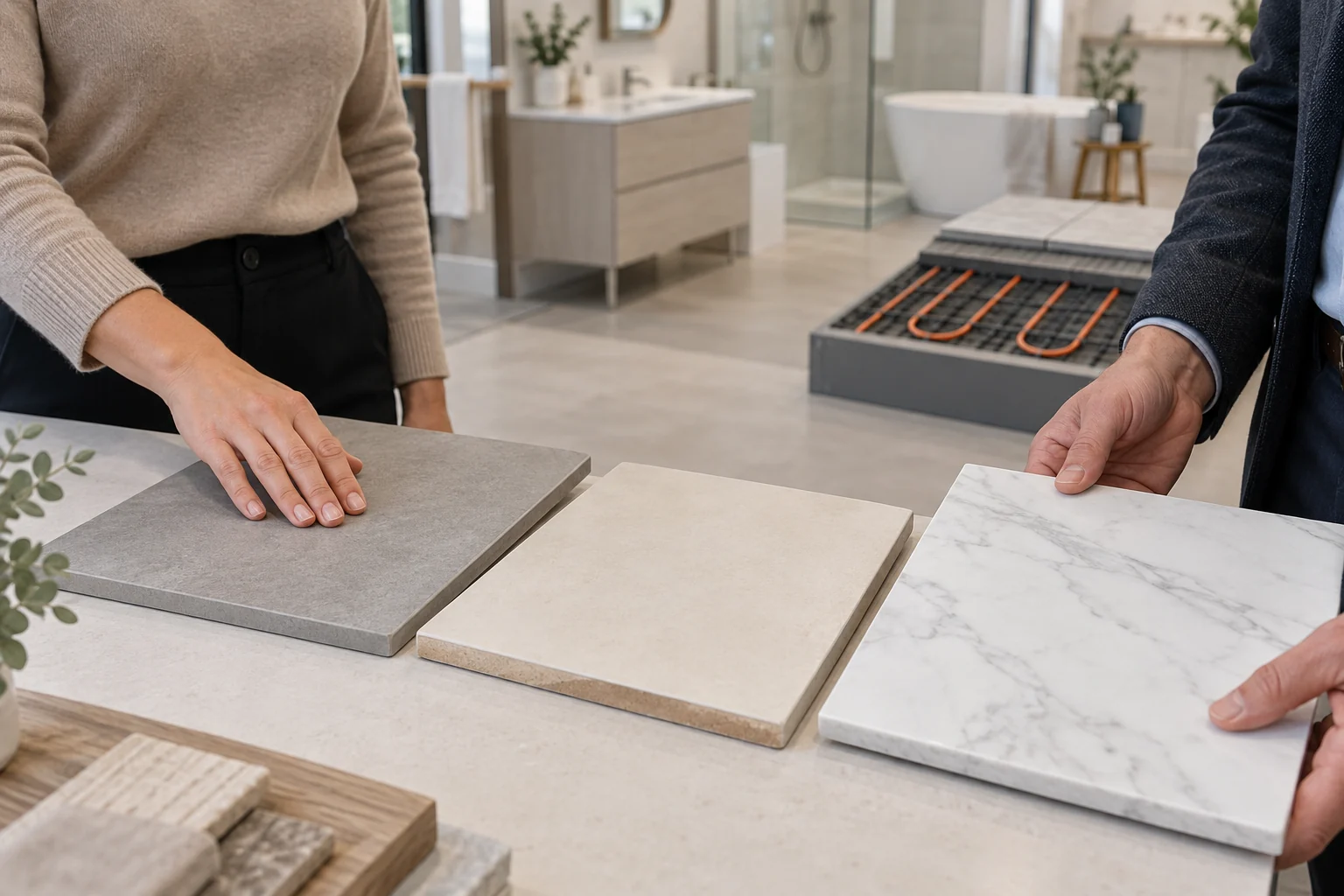
Explore RSC’s tile collection to compare colours, formats and finishes for your project. Visit the RSC Oakville showroom with your room measurements, inspiration photos and heating-system information.
Seeing samples together makes it easier to coordinate the floor with cabinetry, wall tile and other finishes. Confirm the selected tile’s suitability with the installer before placing your final order.
Ready to plan your project? Request a free quote from RSC Kitchen Bath & Flooring.