
Article Summary
Wood-look porcelain tile and luxury vinyl plank can both create a wood-inspired floor, but they feel and perform differently. The better choice depends on moisture, traffic, comfort, installation and long-term maintenance. Porcelain provides a hard tile surface, while LVP is usually chosen for a softer resilient-plank feel.
At RSC Kitchen Bath & Flooring, homeowners can compare wood-look porcelain tiles with the Luxury Vinyl Collection before deciding which material fits each room best.
Table of Contents
- Article Summary
- Table of Contents
- What Is Wood-Look Porcelain Tile?
- What Is Luxury Vinyl Plank?
- Wood-Look Porcelain vs. LVP: Quick Comparison
- Which Is More Water Resistant?
- Which Is More Durable?
- Which Feels Warmer and More Comfortable?
- Which Is Better for Kitchens?
- Which Is Better for Mudrooms and Entryways?
- Which Is Better for Basements?
- Which Is Better for Homes With Pets?
- Maintenance: Wood-Look Porcelain vs. LVP
- Installation Differences
- Which One Looks More Like Real Wood?
- Cost Considerations
- When Wood-Look Porcelain Is the Better Choice
- When Luxury Vinyl Plank Is the Better Choice
- How to Compare Both Options at RSC
- FAQs About Wood-Look Porcelain Tile vs. Luxury Vinyl Plank
What Is Wood-Look Porcelain Tile?
Wood-look porcelain is porcelain tile designed with printed grain, colour and texture that resemble wood boards. It gives you the visual direction of wood while keeping the hard surface and installation method of tile. RSC carries a dedicated Wood Tile category within Porcelain Tiles, including products such as K6901 Elliot Maple and K6942 Muskoka Cottage.
Because it is still tile, grout joints, substrate preparation and installation quality matter. If finish is part of your decision, RSC’s guide to matte vs. polished porcelain tile explains how finish can affect appearance and everyday use.
What Is Luxury Vinyl Plank?
Luxury vinyl plank is a resilient flooring product made in plank form, usually with a printed wood visual and a protective wear surface. Exact construction, water performance and installation requirements vary by product, so buyers should check the specifications for the exact LVP they are considering rather than assuming every vinyl plank performs the same way.
RSC lists multiple options in its Luxury Vinyl Collection, including Dayton Luxury Vinyl and Mesa Luxury Vinyl.
Wood-Look Porcelain vs. LVP: Quick Comparison
| Factor | Wood-Look Porcelain | Luxury Vinyl Plank |
|---|---|---|
| Feel underfoot | Hard and firm | Usually softer and quieter |
| Moisture | Tile surface handles routine water exposure well; the full installation still matters | Performance varies by product and installation system |
| Traffic | Good fit for demanding areas when the correct tile is selected | Good fit when the selected wear layer and product rating match the use |
| Installation | Requires tile-setting skills and careful substrate preparation | Some products can be quicker to install, depending on the system |
| Look | Wood visuals with tile joints and grout | Plank visuals with a resilient-floor feel |

Which Is More Water Resistant?
Porcelain is often a practical choice where floors regularly see wet shoes, splashes or frequent cleaning. The tile itself is dense, but the complete floor system still includes grout, setting materials and the substrate below it. Good installation matters.
With LVP, use the exact manufacturer’s specifications. Some products are designed for higher-moisture areas, while others have different limits. For basements, kitchens and entry areas, do not rely on the word “vinyl” alone; compare the actual product requirements.
Which Is More Durable?
Wood-look porcelain has a hard surface that can work well in high-traffic areas. It does not dent like a softer resilient floor might, although a heavy impact can chip or crack tile. LVP is more forgiving underfoot, but its resistance to scratches, dents and wear depends on the specific product construction and wear surface.
Which Feels Warmer and More Comfortable?
LVP generally feels softer and less hard underfoot than porcelain. That can matter in living areas, basements or rooms where people stand for long periods. Porcelain feels firmer and can feel cooler, although it can also work well with compatible floor-heating systems when the full assembly is designed correctly.
Which Is Better for Kitchens?
Both can work in kitchens. Wood-look porcelain suits homeowners who want a hard tile surface that handles frequent cleaning and kitchen traffic. LVP can appeal to homeowners who want a warmer, quieter feel and a continuous plank look.
For more kitchen-specific detail, see RSC’s wood-look kitchen floor tile guide.
Which Is Better for Mudrooms and Entryways?
Oakville entryways and mudrooms may see snow, wet footwear, road salt and grit. Porcelain is a natural material to consider for these busy transition zones because a properly selected tile can handle frequent cleaning and tracked-in moisture. LVP can also work, but check the selected product’s use recommendations and protect the floor from abrasive grit with good mats and regular cleaning.
Which Is Better for Basements?
Basement decisions depend heavily on the condition of the slab, moisture history, comfort goals and installation system. Porcelain can be a strong choice over a properly prepared concrete substrate. LVP may feel warmer and more comfortable for finished recreation rooms or family spaces.
Address moisture issues before installing either floor. See RSC’s flooring installation guide for broader installation context.
Which Is Better for Homes With Pets?
For pets, think about claws, water bowls, accidents, traction and how much noise you want from paws moving across the floor. Porcelain is hard and easy to wipe clean, but it can be less forgiving and sometimes more slippery depending on the finish. LVP can feel quieter and softer, but scratch and stain performance should be checked for the exact product.
Maintenance: Wood-Look Porcelain vs. LVP
Both are generally straightforward to maintain when cleaned according to the product or manufacturer guidance. Porcelain floors also include grout joints, which may need more attention than the tile surface itself. LVP does not have grout, but harsh cleaners, excess water or unsuitable cleaning methods can still damage some products.
Installation Differences
Porcelain tile installation typically involves substrate preparation, layout, mortar, cutting, grout and curing time. LVP installation varies by product and may use click-lock, glue-down or another approved system. The condition and flatness of the subfloor matter for both.
For installation planning, see RSC’s guide to DIY vs. professional flooring installation.
Which One Looks More Like Real Wood?
This comes down to the exact collection and your design preference. Modern porcelain can reproduce grain, colour variation and plank proportions very well, but grout joints still signal that it is tile. LVP uses plank construction and can create a continuous wood-floor impression with less visible joint contrast.
Cost Considerations
Do not compare only the product price. Total cost may include floor preparation, removal of existing flooring, installation labour, setting materials or underlayment, trims and future repair needs. Porcelain can require more installation labour, while some LVP systems may install faster. Actual cost depends on the specific products and the condition of the room.
For a useful cost comparison, get a quote based on the selected products and project conditions.
When Wood-Look Porcelain Is the Better Choice
Wood-look porcelain is worth strong consideration when you want a hard tile surface, expect frequent wet footwear or cleaning, prefer tile in kitchens and entry areas, or want a wood-inspired visual without choosing a resilient floor. It may also make sense when adjoining rooms already use tile and you want consistent floor construction.
When Luxury Vinyl Plank Is the Better Choice
LVP is worth strong consideration when comfort, reduced hardness underfoot, plank-style appearance and potentially simpler installation are important. It can be especially appealing in finished basements, living areas and other rooms where a softer feel is part of the goal.
If your real comparison is hardwood versus LVP, RSC already has a dedicated Hardwood vs. Luxury Vinyl Plank guide. That is a different search intent from this porcelain-vs-LVP decision.
How to Compare Both Options at RSC
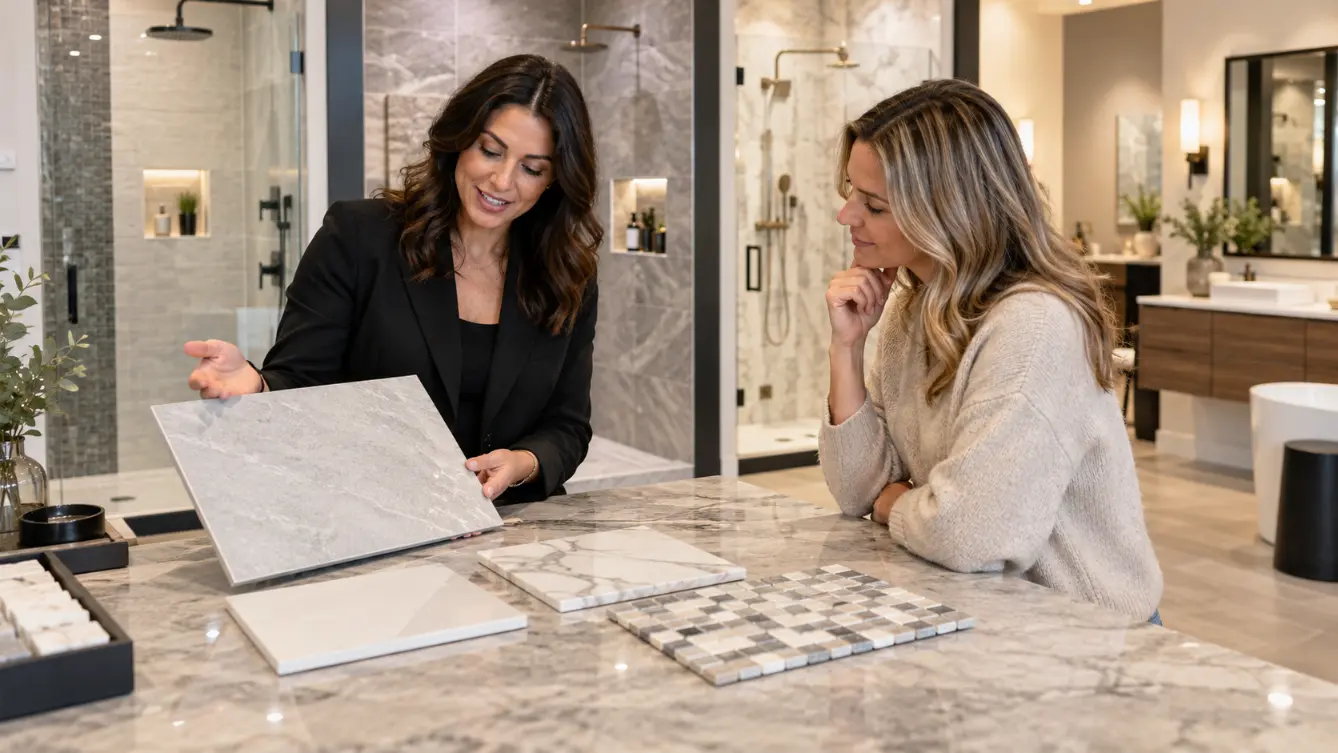
The best way to compare these floors is to see real samples together. At the RSC Oakville showroom, compare colour, grain, finish, plank or tile dimensions, edge detail and how each surface feels underfoot. Bring cabinet, countertop or paint samples if the flooring needs to coordinate with a larger renovation.
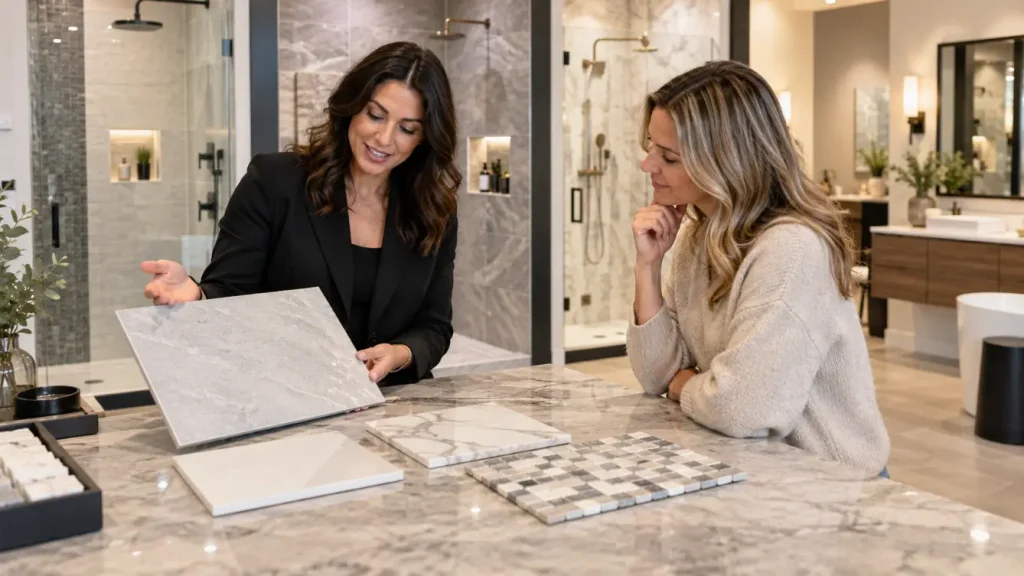
If you already have a preferred product or room in mind, you can also request a free quote for your project.
FAQs About Wood-Look Porcelain Tile vs. Luxury Vinyl Plank
Is wood-look porcelain better than LVP for a kitchen?
Either can work. Porcelain is a strong option for homeowners who prefer tile and expect frequent cleaning or wet traffic. LVP may be preferred when comfort and a softer plank feel are higher priorities. Check the exact product specifications before deciding.
Can LVP be used in a basement?
Many LVP products are marketed for basement applications, but suitability depends on the specific product, slab condition, moisture conditions and approved installation method. Confirm those details before installation.
Does wood-look porcelain feel cold?
Porcelain can feel cooler and harder than LVP, especially over concrete. Room temperature, underfloor heating and the complete floor assembly all affect comfort.
Which is easier to replace if one area is damaged?
That depends on installation. Individual tile replacement is possible but can involve removing grout and mortar. LVP repair depends on whether the product is floating, glue-down or another system and where the damaged plank is located.